
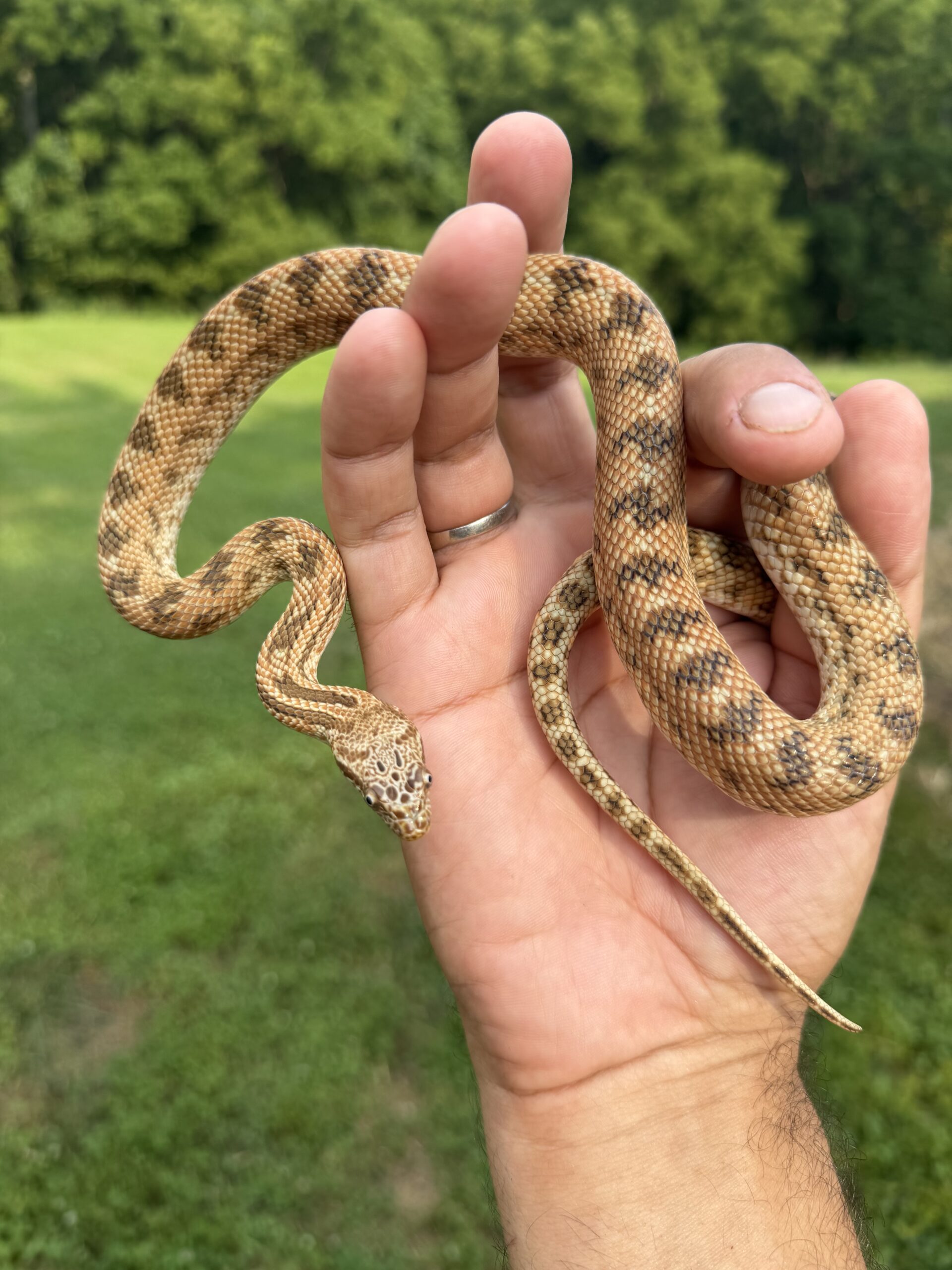
Diadem Rat Snake
byPaul's Cool Scales· Columbus, OhioBeta: you and the seller arrange payment and shipping directly — Culebra doesn't hold the money on these deals. Escrow checkout launches at the end of October.
- Message the seller directly to arrange the sale
- Beta: you pay the seller directly — Culebra doesn't hold the money yet

Escrow checkout launches end of October
This animal
- Sex
- ?Unsexed
- Weight
- Ask seller
- Length
- Ask seller
- Age
- Ask seller
- Hatched
- Ask seller
- Origin
- Acquired stock
- Last fed
- Ask the seller
- Listing ID
- PAULS-COOL-3099
Temperament & handling
Ask the seller
Active, alert and curious — fast-moving but rarely defensive.
Read the full Colubrids care guideIn Culebra Codex — the library & coursesGenetics
0 visual genes
Diet & feeding
Ask the seller
Voracious feeders — a tight-fitting lid is essential.
Typical care for this species
General colubrids guidance, not this animal's current setup. Ask the seller how it is kept now.
Secure lid — colubrids are accomplished escape artists.
Ask the seller before you buy
- Is it feeding reliably, and on what?
- Clean, complete sheds and clear eyes?
- Hatch date, weight and current length
- Feeding and shed records
From the breeder
The diadem rat snake ( Spalerosophis diadema ), also called the royal diadem or jeweled rat snake, is a fast, active, non-venomous colubrid native to arid and semi-arid regions spanning North Africa, the Middle East, and South/Central Asia (including Pakistan and India) . They grow up to 4 to 6 feet long and feature an iridescent, polished crown of head scales. Physical Appearance & Behavior Appearance: Tan, sandy, buff, orange, or reddish base colors marked with dark or black dorsal blotches. Their narrow snouts and bulging temples give them a distinct, viper-like look. Temperament: Known to be high-energy, defensive, loud hissers, and quick to strike when initially cornered or handled, though they can settle down with consistent, calm interaction. Taxonomy Note: Though commonly called “rat snakes,” they are genetically closer to racers and whipsnakes. Care in Captivity Enclosure: Requires a dry, arid setup with good ventilation. Temperature: Ambient temperatures around 77°F–78°F (25°C–26°C) with a warmer basking spot reaching 87°F–95°F (31°C–35°C). Diet: Carnivorous; thrives on appropriately sized rodents (mice or rats)
Check your state's rules before you buy
Laws change and vary by county. Confirm with your state wildlife agency; the seller must confirm you can legally receive the animal.
Shipping
Shipping is arranged with the seller during beta. Ask about their packing, ship days and live-arrival policy.
ComingAnimal records that move to your Cerebro collection on sale.
Breeder reviews — Paul's Cool Scales
No reviews yet — this breeder is newly verified.
Knowledge — Culebra Codex
Know the animal before you buy.
Every Exchange listing links to the Codex — the reptile world's reference library.
More from Paul's Cool Scales
View storefront →
Coming Soon: Mangrove Snake — Adult Pairs (2 pairs available)
Coming Soon: Woma Python — Babies (6 available)
Coming Soon: Brazilian Rainbow Boa — Adult Pair
Coming Soon: Tricolor Hognose (3 available)
Gear for this colubrid
Enclosures, heat, lighting and feeders, in the same cart as the animal.
Similar colubrids
See all →Coming Soon: Bullsnake — Adult 2022 Female, Normal het White Sided het Patternless
Coming Soon: False Water Cobra — Adult Pair, het Lavender
Coming Soon: House Snake — T+ het T- (2 available)